



 Suomi
Suomi Русский
Jyväskylä Christian School – A historic learning environment renewed
A century of stories, a new beginning for future generations
Jyväskylä Christian School operates in a heritage building whose walls embody over a hundred years of history. Originally named after Uno Cygnaeus, the school has served generations of pupils and even functioned as a wartime hospital — even Marshal Mannerheim delivered a speech there to war veterans with disabilities. Following an extensive renovation, the building has been given a new life as a modern learning environment.
The property had stood vacant for more than a decade before the decision was made to renovate it. With the completion of the project, the school community was finally able to return to its historic premises.
Principal Petteri Muotka recalls the atmosphere when the doors reopened:
“The long wait has been rewarded. Moving in mid-school year was a challenge in itself, but the result has proven well worth it. The facilities have turned out to be extremely functional, and the spirit has been positive from day one.”


Renewal where history meets modernity
The renovation was comprehensive: the building was stripped down to its concrete shell, and all mechanical systems were replaced. Protected architectural details were carefully restored. The ceilings now display paintings inspired by 19th-century folk tales, and decorative frescoes uncovered during the work were brought back to their former glory. Murals discovered around the auditorium stage were also preserved. These details allow the building to continue telling the stories of past generations, even as it now serves the needs of today’s education.
The furnishing concept was to combine respect for history with modern ergonomics, hygiene and sustainability. All furniture was newly acquired, and both teachers and students were actively involved in the decision-making. Alternatives were tested in practice before the final selections were made.
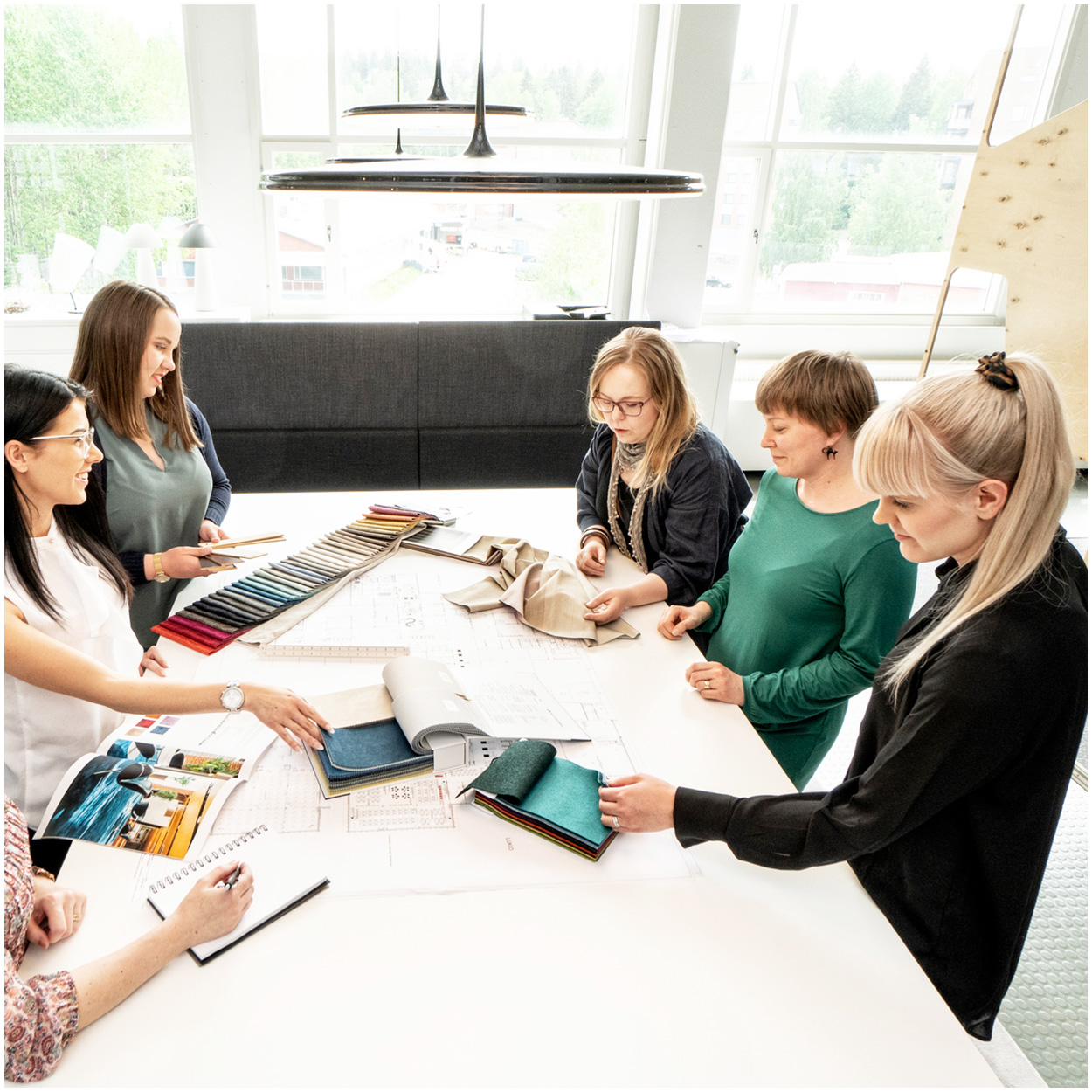
“The old school, built in 1925, was renovated with respect for its original character. I created a unified color palette for the entire school’s furnishings, drawing on the building’s beautiful details — heritage colors and restored ceiling paintings. This way, new and old merged into one harmonious whole,” explains interior designer Jenni Knuutinen.
“It is wonderful that we were listened to and that both pupils and staff had the opportunity to contribute. That gave us a sense of ownership and made the result genuinely suitable for us,” adds the principal.
Facilities that support everyday life
Students and staff feel that the renewed facilities strongly support learning, focus, and collaboration. The break area has quickly become a favorite: the light streaming through the bay windows, the carefully curated color scheme, and the well-chosen furniture make it an inviting place for rest and encounters.
“Restoring this historic building and returning it to school use was truly a cultural act. It will carry its values into the future. The significance was evident during the Open House event, which drew more than a thousand visitors. Among them were former pupils from decades ago, some bringing old class photos that helped long-lost classmates find each other again. These moments confirmed that the school’s value is not limited to the present but continues across generations,” says Muotka.
From the designer’s perspective, the project was equally unique:
“The new furniture had to fit seamlessly into a century-old setting, without appearing out of place. A clean, calm design language and carefully selected materials created a timeless whole. At the same time, everyday practicalities were addressed: for example, special attention was given to coat storage for younger pupils, so that mornings would run smoothly and everyone would have a clear place for their belongings,” Knuutinen explains.


A partnership that stands the test of time
The renovation project was carried out in close collaboration with ISKU. In addition to furnishing, the school received a complete service package including interior design, project management, user participation, and installation. The needs of users were carefully considered, and solutions were tested in advance to ensure that the final result would best support the daily life of pupils and teachers.
ISKU representatives Sanna Linnus and Tomi Pesonen describe the project:
“From the very beginning, this was an exceptionally interesting assignment due to its history and architecture. We did not want to provide just the cheapest option, but a complete solution that respects the spirit of the old building while creating comfortable, functional facilities for the users. The principal and teachers were able to test our proposals, and together we found the best options. The project was successful because it was carried forward in genuine cooperation with people, listening to their needs.”
The school’s renewal ties together its long history with the requirements of today. It demonstrates that when a history-respecting environment, user participation, and a strong partnership come together, the result is spaces that support everyday life now and remain valuable for generations to come.


