



 Suomi
Suomi
Functional solutions arise from open collaboration
Oak Hospital, part of HUS (Helsinki University Hospital), brings together specialized eye care under one roof. In this large and technically demanding project, the integration of spaces, medical equipment, and furniture needed to function seamlessly together to support nursing work, patient safety, and smooth daily operations.
“When designing a hospital, furniture cannot be considered separately from the functions. Each solution must support how doctors, nurses, and patients work together in the space,” says Sari Ranta, Special Planning Officer at HUS Corporate Administration.


A complex project requiring precise coordination
Oak Hospital includes a variety of spaces, such as examination rooms, surgery and monitoring areas, pediatric units, and staff work and break areas. The reception areas, in particular, turned out to be challenging from an interior design perspective. Although the rooms appeared similar in plans, their equipment and medical devices varied significantly.
The interior design was led by ISKU Spaces’ Ulla-Maija Innanen and Petra Ahonen. Due to the large scale of the project, the design work was carried out by two designers, which allowed for efficient layout development and accelerated project progress.
“Active involvement from the user representatives was crucial. They know how much space the equipment occupies and how patients and staff interact in the rooms. Our job, along with the designers, was to fit the furniture around this overall environment,” explains Ranta.
Furniture selections support patient safety and smooth operations
In a hospital environment, furniture choices are primarily based on functionality. Patient chairs emphasize sturdy armrests, good ergonomics, and sufficient load-bearing capacity. The materials had to be easy to clean, fire-safe, and resistant to heavy wear.
“Aesthetics are important, but in a hospital, the decisive factors are usability and safety. For example, armrests must genuinely support standing up, not just look good,” Ranta states.


Color and material choices combine aesthetics, hygiene, and durability
The choice of colors and materials was a key part of the project, as aesthetics and the strict requirements of a hospital environment needed to be balanced. The design considered both the visual appearance of the spaces and practical maintenance, hygiene, and durability.
“We started with the building’s interior color concept. We wanted the furniture to complement the overall design and create a calm and peaceful atmosphere without making the environment too clinical. Very light shades were avoided, especially in the high-traffic lobby areas where dirt and wear are easily visible,” explains ISKU Interior Designer Ulla-Maija Innanen.
Material choices were guided by hygiene and durability requirements. We selected fire-safe, antimicrobial, and wear-resistant materials, and in the lobby areas, we also used fabrics that are impermeable to liquids. At the same time, it was important for us that the spaces felt human and safe for both patients and staff.
Frequent communication kept the project moving forward
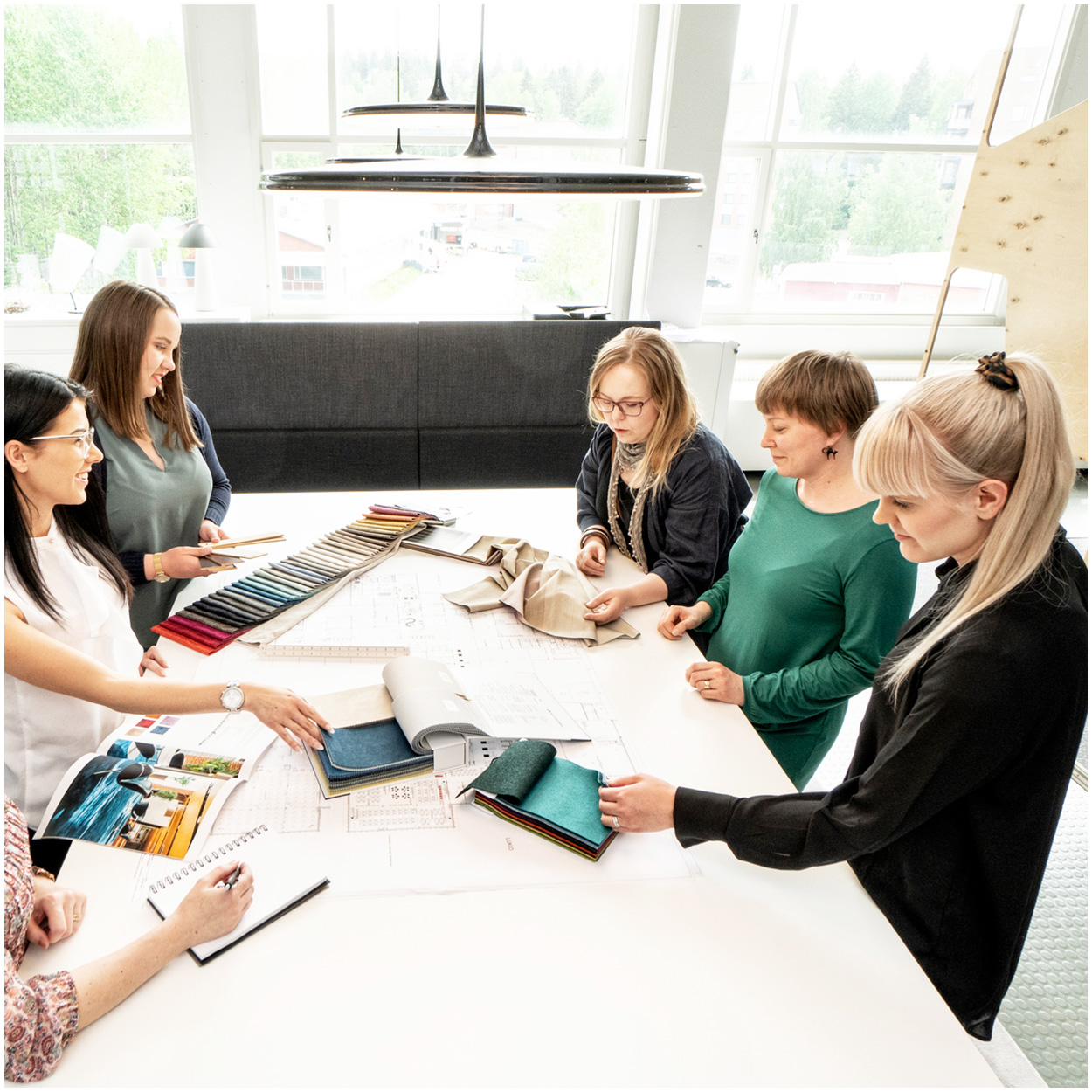
During the several months of design work, weekly meetings were held to review spaces, fine-tune solutions, and agree on the next steps. The same core team stayed involved throughout the project, providing continuity and clarity in progress. Changes and refinements were addressed in a timely manner, ensuring the project stayed on track.
“When the team stays together and meets regularly, there’s no need to start over every time. Ambiguities were resolved quickly, and solutions were advanced without long breaks,” Ranta notes.


Open and honest communication built trust
The key to the success of the project was open and direct communication. Challenges were addressed promptly, and solutions were sought together. Long-term collaboration and familiar working practices helped ensure smooth operations. When the parties know each other’s ways of working, the focus can be on solutions rather than reiterating basics.
“Open communication is perhaps the most important single factor. When things are discussed honestly, backup plans can be made, ensuring greater security throughout the process,” Ranta says.
From a designer’s perspective, the significance of prior collaboration was also highlighted in the project.
“Shared working practices and clear responsibilities sped up decision-making and reduced misunderstandings. Long-term collaboration resulted in smooth progress,” summarizes Ulla-Maija Innanen.
User experience is key
Before the facility opened, familiarization visits were arranged, and the feedback at this stage was already positive. After the implementation, solutions were further fine-tuned based on user experiences.
“We let the users be in the spaces first and assess everyday life in practice. After that, we can make any necessary adjustments. This ensures that the solutions truly serve the daily work,” Ranta describes the key role of users in evaluating the functionality of the spaces


