

 Suomi
Palvelutalo Mannerhelmi – home and community supporting a good everyday life for older people
The starting point for the space planning of the assisted living at Palvelutalo Mannerhelmi, completed in the centre of Mikkeli in Finland, was above all to create a home for the residents – a warm, safe and cosy environment where everyday life feels pleasant and like their own. In the furniture design implemented by Isku Spaces, homeliness was combined with the special needs of older people’s everyday life, accessibility and safe mobility.
Supported living in the centre of Mikkeli
Palvelutalo Mannerhelmi is an eight-storey property in the centre of Mikkeli, developed by Mikalo. Eloisa’s 59-place housing services unit is located on three floors of the building. It comprises 39 round-the-clock assisted living apartments and 20 community housing apartments.
The building combines different forms of housing. In addition to the premises of Palvelutalo Mannerhelmi, the building has Mikalo’s rental apartments, whose residents can receive Palvelutalo Mannerhelmi’s home care services according to their needs. The central location brings the services of the centre of Mikkeli close by and supports the residents’ independent everyday life and self-reliance – for example, the opportunity to go shopping themselves when their own functional ability allows it.
People’s homes, not patient rooms
Each resident has their own personal room, and the shared lounges have been designed to be the heart of the whole building: places for being together, for encounters and for the small moments of everyday life.
“The spaces must meet the residents’ different needs, but at the same time they must feel like home,” says interior designer Tiina Jalava, who was responsible for the interior design of the site at Isku Spaces.
The residents are older people, and their functional ability varies. Many use, for example, a rollator or a wheelchair. Therefore, accessibility, safe routes and sufficient space for moving with mobility aids were key starting points of the design.
A homely atmosphere at the heart of the design
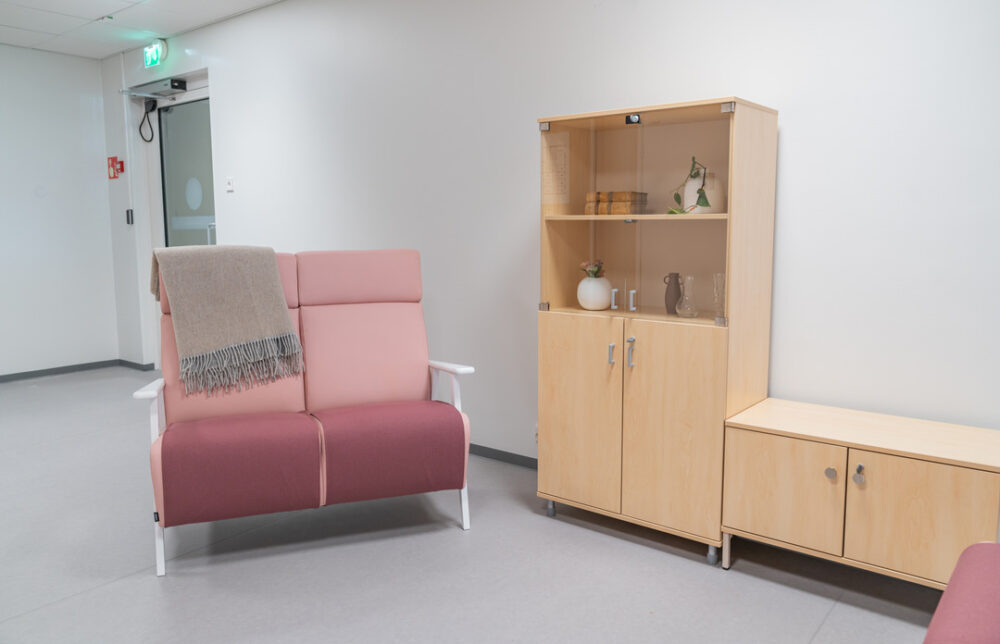
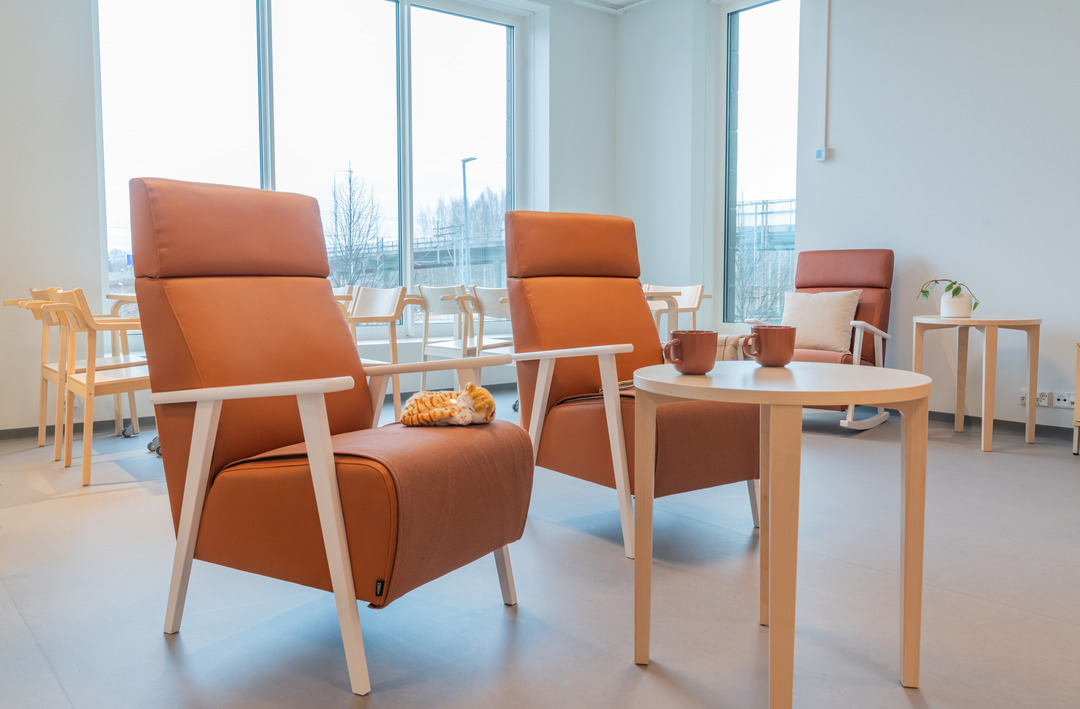
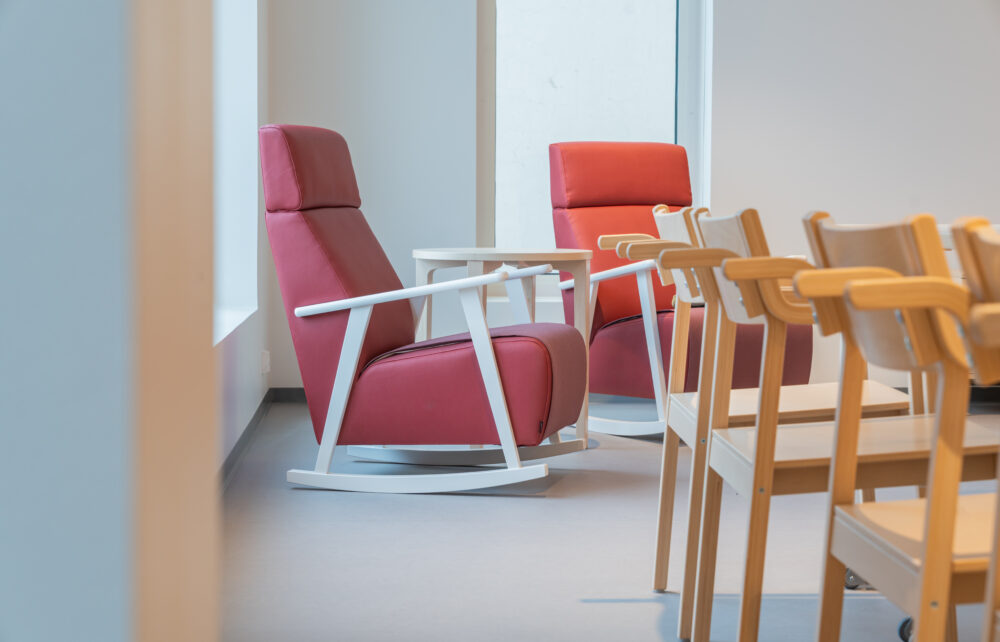
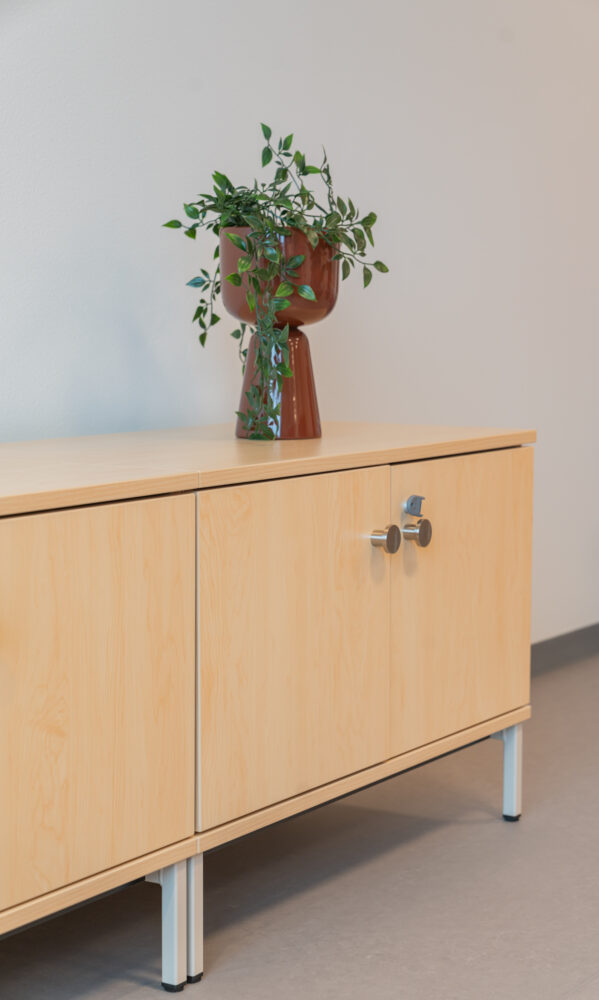
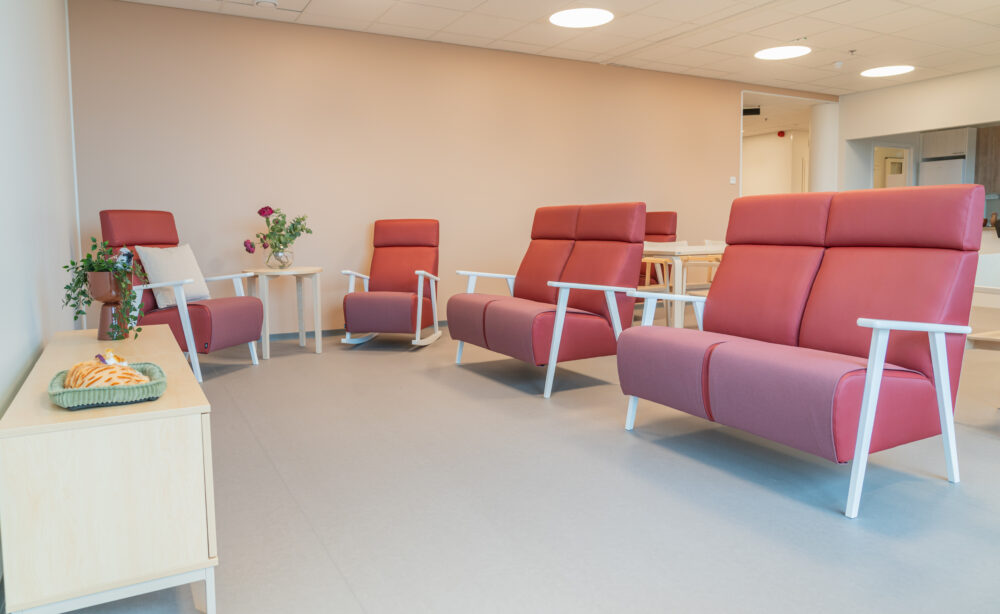
Homeliness shows in the choice of materials, the furniture and the harmonious colour scheme. Each floor was given its own recognisable colour palette.
Interior designer Tiina Jalava explains that the colours were intended to bring individuality and atmosphere to the spaces, but they also serve a functional purpose. The furniture choices emphasised comfort, ease of cleaning and aesthetics. Alongside the functional requirements, the aim was to preserve a warm and homely look.
“Accessibility and safety go hand in hand in this project. At the same time, we wanted the spaces to have colour, warmth and a homely feel. Functionality doesn’t have to mean an institutional environment,” Jalava sums up.
Functional furniture starts from the users’ needs
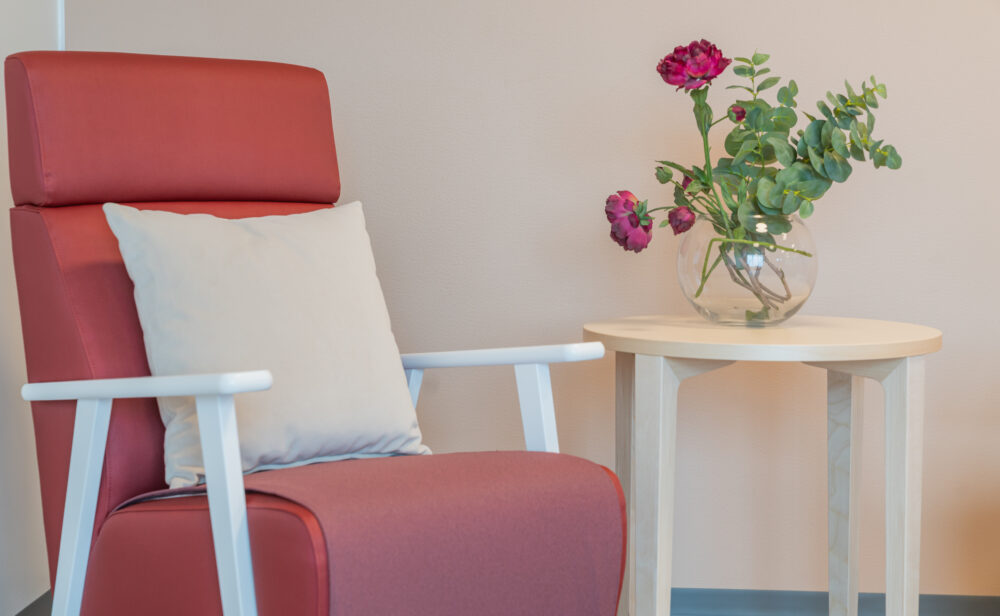
In its call for tenders, Palvelutalo Mannerhelmi set out precise functional requirements for the furniture. The dimensions had to suit older people, the seats had to be easy to get up from, and the residents’ chairs and sofas had to have armrests. The upholstery materials were also required to be durable, easy to clean and compliant with fire safety requirements for public spaces.
“Isku Spaces’ tender best met the needs of the user group as a whole. Functionality and colour contrasts were important to us. There was enough furniture, yet the overall layout remained spacious, just as we had hoped, and the use of mobility aids had been well taken into account,” summarises Emma Pukkila, who was responsible for the project at Palvelutalo Mannerhelmi.
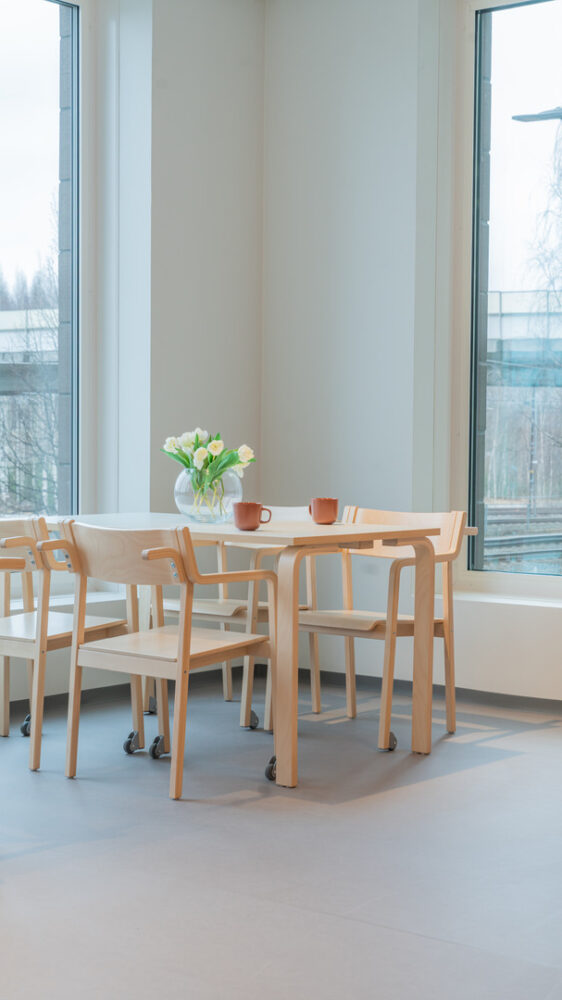
The chairs selected for the project included the Iki, Ote and Mainio models. The choices emphasised features that support older people’s everyday lives, such as high armrests and high backrests that support the head. Some of the furniture was already familiar to Palvelutalo Mannerhelmi from other sites, where it had proven to work well in daily use.
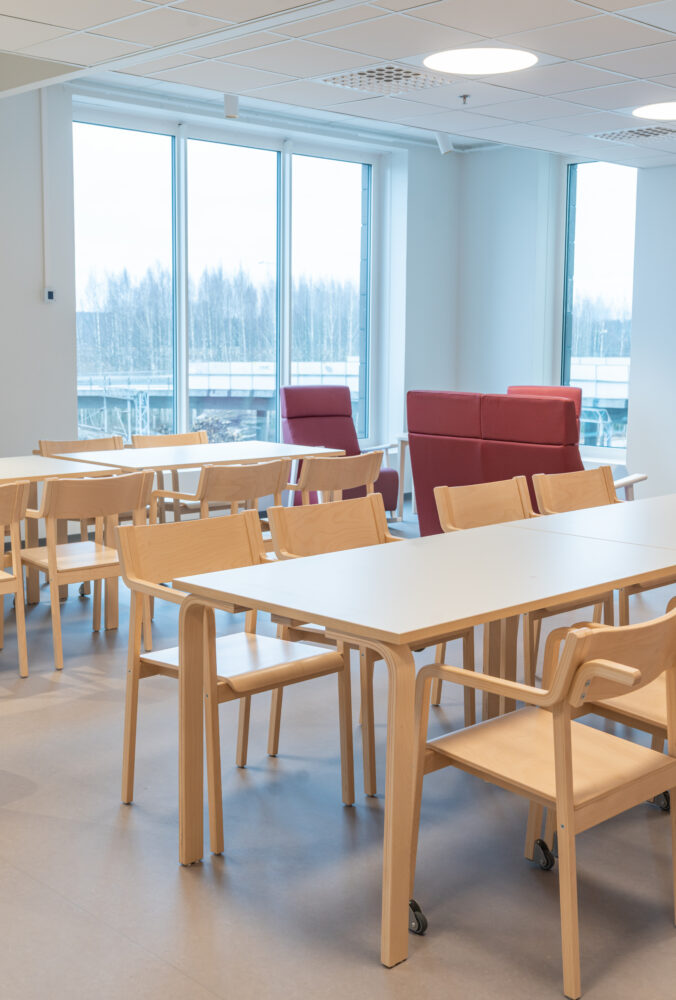
Residents eat their meals in the shared lounges, where chairs suited to different needs form a unified and calm
Shared spaces bring residents together
whole. Alongside the residents’ own rooms, the shared spaces offer places for spending time together and meeting others, supporting the community-oriented idea behind the whole facility.
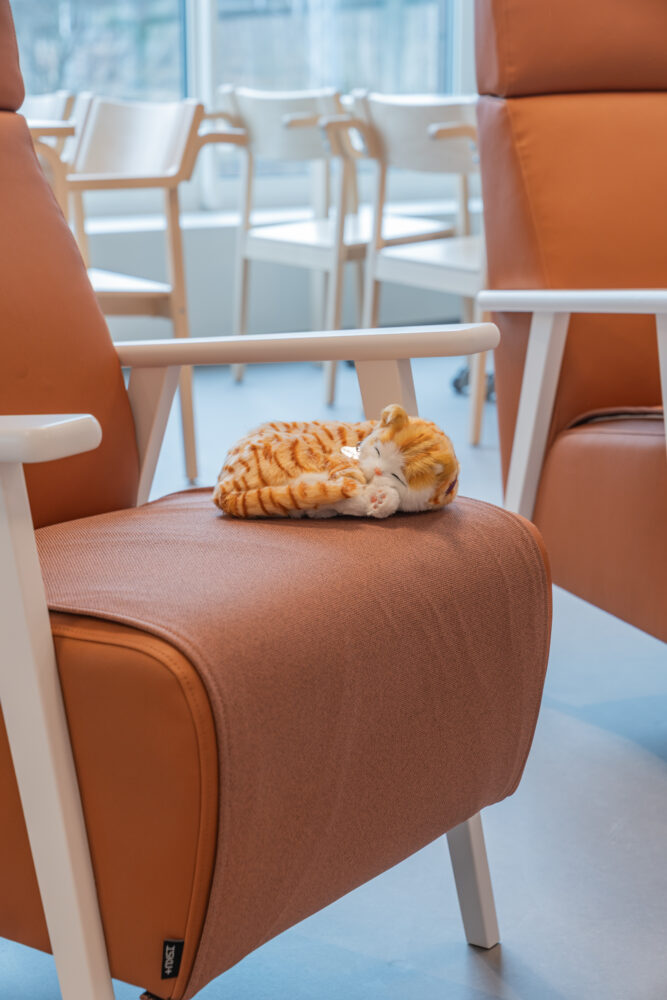
Homeliness was also created through small details that evoke memories. Each shared space has its own “pets” – soft interactive cats that purr and breathe when stroked on someone’s lap. Singing birds, in turn, bring gentle sound and liveliness to the spaces. These details enrich everyday life and can bring residents comfort, joy and a sense of familiarity.
“In the design, we wanted to leave room for small things like these as well. Not everything has to be a piece of furniture or a functional solution as such. Something that evokes a memory, brings joy or feels familiar can also be meaningful in a resident’s daily life,” says Tiina Jalava, who was responsible for the project’s interior design.
The tendering process left room for new solutions
The furniture procurement used a reverse tendering model. Instead of the client specifying every product in advance, bidders were given the opportunity to propose, within the budget, an overall solution that would best meet the needs of the user group and the spaces. This also made it possible to draw on the suppliers’ experience and expertise from similar projects.
“The client doesn’t need to know everything that’s available on the market or in the supplier’s collection, or what new solutions could be used. When bidders are given room to use their own expertise, the plan can include many ideas that wouldn’t otherwise have come to mind,” explains Anna Miettinen, Key Account Manager at Isku Spaces.
Some leeway was also left in the budget for solutions that would complement the whole. This made it possible to add, for example, solutions that improve the acoustics, as well as the birds and interactive cats that bring joy to everyday life.
The end result is a whole in which the practical needs of senior living and homeliness go hand in hand. Accessibility, safety, functional furniture, colours and small details that enrich everyday life together create an environment whose most important task is ultimately very simple: to be a home for the resident.