



 Suomi
Suomi
From Industrial Space to a High-Performance Learning Environment
The LUT Executive MBA (EMBA) is a leadership development program at LUT University’s Lahti campus, combining research-based academic knowledge with practical business expertise.
When the program—focused on strategic thinking, growth, and enhancing leadership performance—was renewed in 2025, it also highlighted the need for a space that reflects its high standards.
A space that supports learning and matches the program’s level
Before having a dedicated space, EMBA education was organized across different parts of the campus and, when needed, in other cities. While functional, this approach did not support a consistent learning experience.
The physical environment quickly became a key part of the overall concept. The goal was to combine functionality, atmosphere, and high quality in a way that supports learning and meets the expectations of the target audience.
“This is a program designed for experienced executives, where expectations are high. It was clear that the facilities also needed to evolve alongside the program. We wanted to create a space that truly meets the needs of high-level education and its participants. It was important for us that the space is not only functional, but also enhances the learning experience, communicates quality, feels welcoming, and reflects the university’s identity,” says Liisa-Maija Sainio, Academic Director of the LUT Executive MBA program.
From former production facility to modern learning environment
The new learning environment was designed based on an industrial space found on campus. Previously used for Isku’s production, the space was high, open, and defined by concrete surfaces, without the typical structures of a learning environment.
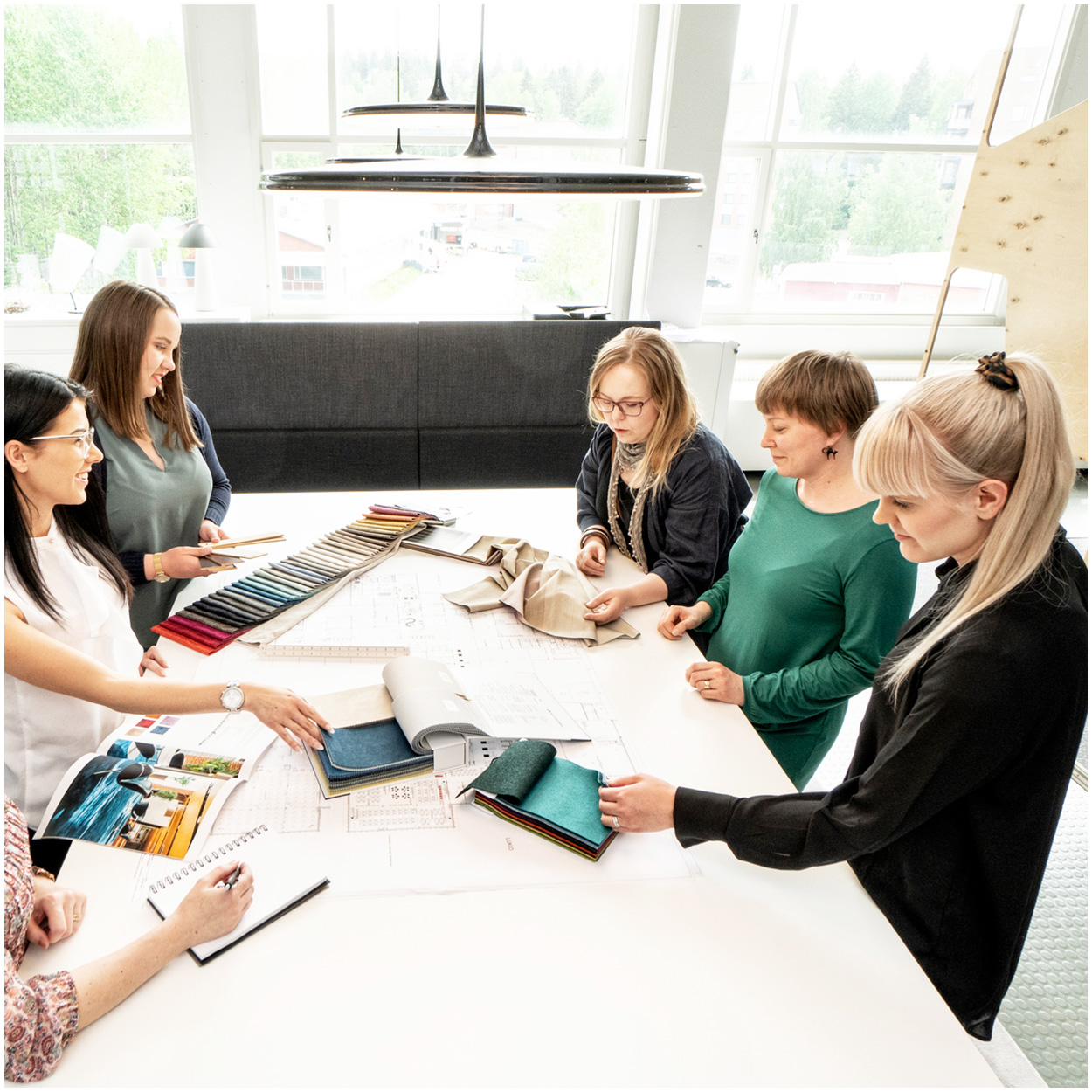
“The design was carried out in close collaboration with the client and the architectural firm. Since the space was previously a production facility, everything—from technical solutions to surface materials—had to be planned from scratch for this project. We approached the design from the space’s original characteristics, not trying to hide its past but instead embracing it and complementing it with a refined and controlled overall look,” explains Tiina Jalava, Interior Designer at Isku.
The original character of the space was intentionally turned into a strength through material and furniture choices.
“A timeless combination of black, oak, and moss green brings calmness and cohesion to the space, while preserving its industrial character. The contrast between the raw architecture and the refined finish makes the environment visually interesting, yet balanced and high-quality,” Tiina summarizes.


A flexible environment that supports different ways of learning and working
The space was not designed as a traditional classroom, but as a flexible learning environment that adapts to various ways of learning and working. The aim was to create a setting that evolves with different situations while maintaining a calm and cohesive visual identity. Key elements include adaptability, excellent acoustics, ergonomics, and smooth transitions between activities.
“Lightweight, movable tables and chairs on wheels allow the space to be quickly reconfigured from lectures to group work. Special attention was paid to acoustics, and standing workstations bring variation to long training days. The space is complemented by meeting rooms and work pods, where participants can handle work tasks without interrupting teaching,” Sainio explains.
Another key objective was ensuring the space adapts to different needs without compromising its visual or functional consistency. Discreetly integrated technology—such as cameras, sound systems, and custom power bank solutions—ensures seamless participation both on-site and remotely.
A versatile space for everyday use and interaction
Although designed primarily for EMBA education, the space also serves multiple purposes. Outside of training sessions, it functions as a workspace and meeting environment for LUT Business School staff and adapts to various events.
Versatility was a core principle from the beginning. The goal was to create a space that evolves with daily use without compromising its appearance or functionality.
“The aim was to design a space that works naturally in different situations, not just in education. In fact, its versatility has exceeded our initial expectations,” Sainio notes.
A shared vision ensured smooth collaboration
The success of the project was built on close collaboration. The goal was clear from the start and refined along the way.
“From the very beginning, it felt like we spoke the same language. We were genuinely listened to, and the solutions consistently moved the project forward,” Sainio summarizes.
A strong shared understanding gave direction to the design and enabled the project to be built step by step. Interior designer Tiina Jalava notes that at its best, a space does not draw attention to individual elements but works seamlessly as a whole.
“In this project, we succeeded in combining functionality, acoustics, and visual design into a cohesive whole that supports learning and everyday user needs—almost effortlessly.”


