



 Suomi
Suomi Polski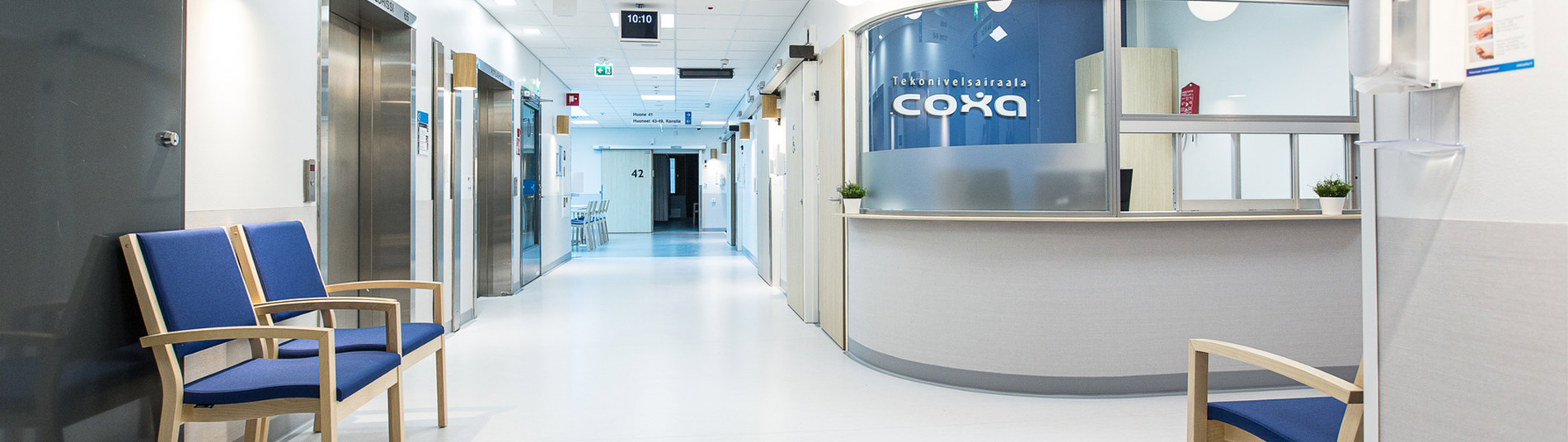
Coxa’s antimicrobial ward is the future of hospital facilities
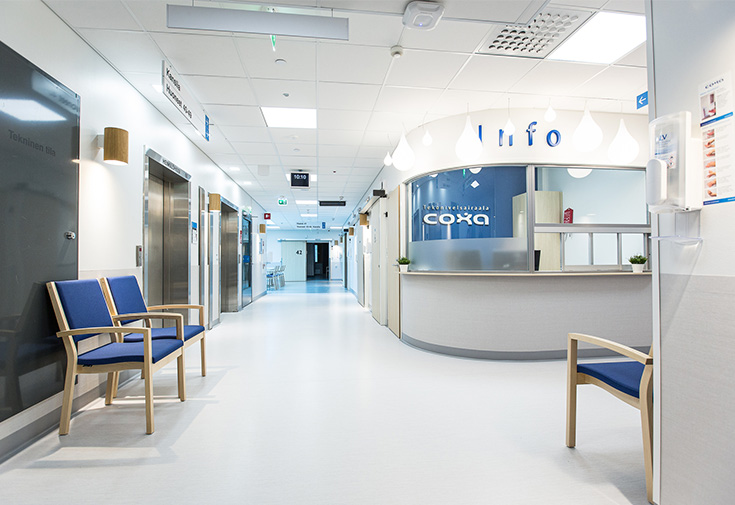
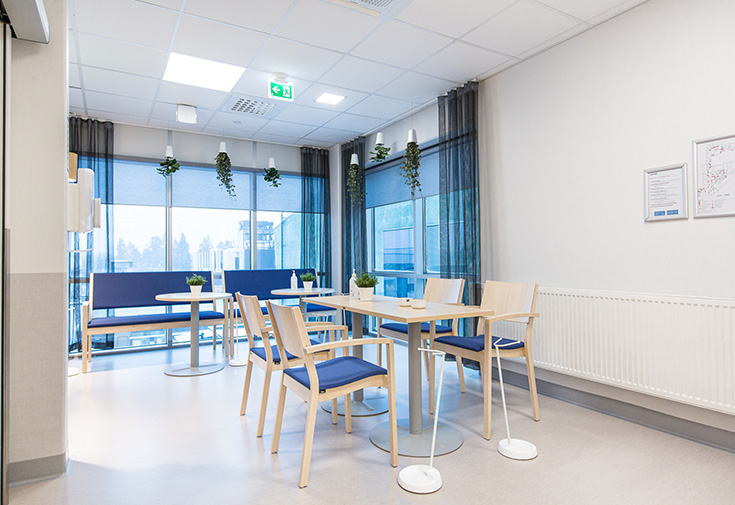
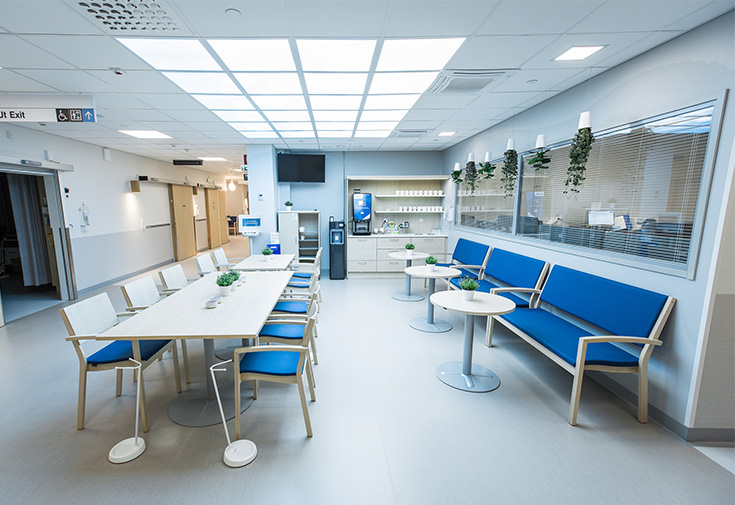
At the new ward of the Coxa Hospital for Joint Replacement, almost all contact surfaces from beds, handles and cubicle curtains to wall paints are coated or treated with antimicrobial technology that kills bacteria and viruses. The holistic antimicrobial solution for the new ward was delivered in close collaboration between Coxa and the HygTech Alliance, including ISKU supplying the antimicrobial furniture to the ward.
“The purpose of the surfaces is to prevent infections transmitted via contact. The need for contact itself is minimized, for example, with doors that are open during the day and with touch-free toilet seats and hand towel dispensers”, says Marjo Uusitalo, Coxa’s Development Manager.
In Coxa, the efficacy of antimicrobial surfaces on the incidence of morbidity among patients and staff will be evaluated at the end of a defined follow up period when results can be compared between different wards.
The MRSA bacterium is destroyed in 20 minutes but the surfaces are harmless to humans
Antimicrobial furniture destroys bacteria throughout its lifecycle. Under controlled laboratory conditions for example, E. coli and MRSA are eliminated on the antimicrobial surface in less than 20 minutes. In the real world, conditions vary and results may differ. Only a tiny amount of silver is needed to provide antimicrobial features. For example, on a table surface, the amount required equals that found in a single printed photograph.
Antimicrobial products are safe for the user. In an ongoing study, a silver containing antimicrobial laminate surface was extracted with artificial sweat for up to 168 hours. The amount of silver transferred was one thousandth of the daily intake considered safe for a 60 kg adult through food.
Traditional infection prevention methods such as regular cleaning and good hand hygiene remain critical. Antimicrobial solutions provide an additional way to help prevent infections.
The efficacy is widely demonstrated
The efficacy of antimicrobial silver and copper surfaces has been widely demonstrated. Research results on the effects on morbidity have also been obtained in recent years.
In 2013, a 21 month study of 16 rooms in intensive care units at three hospitals in the United States showed that patients in intensive care rooms with essential contact surfaces coated with antimicrobial copper experienced 58 percent fewer hospital acquired infections than patients in control rooms.
In 2018, the efficacy and impact of antimicrobial surfaces were studied at Taatila School in Lieto in the Case Study Antimicrobial vs. Non antimicrobial Class Room furnished by ISKU. In Anni Hyvonens living lab case study on antimicrobial surfaces for the laboratory analysis department of Metropolia University of Applied Sciences, all furniture and contact surfaces in one class were changed to antimicrobial.
The comparison was made to a non antimicrobial and otherwise identical class which was cleaned and utilized in the same manner as the antimicrobial class.
Pupils who studied in the antimicrobial class had 52 percent fewer short term absences during the 113 school days studied than in the comparison class. Prior to the comparison, long term sick leaves and accidents were removed from the statistics.
The same study showed that the total number of bacteria did not correlate with ATP measurements. ATP measurement is used for example in hospital environments for assessing the quality of cleaning.
Read more about ISKU+ Antimicrobial technology.
A joint project of the HygTech Alliance
Abloy, ISKU, Korpinen, Lojer, Oras and Teknos, Finnish manufacturers of antimicrobial furniture and materials, participated in the implementation of the “Finland’s most antimicrobial” ward, and the HygTech Alliance takes Finnish expertise in antimicrobial facilities abroad. A number of other companies were also involved, such as Fabrica, which manufactures antimicrobial curtains.